Recipe Title
A Box of Questions: A Slow-Brewed Story of Memory, Mystery, and Meaning
Prep Time
A lifetime of memories
One quiet afternoon
Discovery Time
Unplanned
Emotionally rich
Difficulty Level
Easy curiosity, deep reflection
Yield
- One solved mystery
- A deeper understanding of a grandmother’s life
- A renewed connection to the past
Introduction: The Unexpected Find
I wasn’t looking for anything special.
Just cleaning.
Just sorting.
Just doing what needs to be done when someone you love leaves behind a lifetime of belongings.
That’s when I found the box.
Small.
Heavy.
Carefully tucked behind old scarves and folded letters.
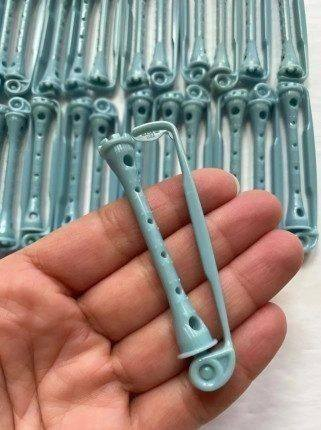
Inside were more than thirty strange objects—identical in purpose, but not quite identical in form.
And at that moment, one thought rose above all others:
What were these… and why did my grandmother keep so many?
Ingredients (What You’ll Need for This Discovery)
- One old house filled with quiet echoes
- A grandmother’s carefully kept belongings
- A sturdy cardboard box
- Over 30 unusual, unfamiliar objects
- A curious mind
- Patience
- Respect for the past
Optional:
- A cup of tea
- Soft afternoon light
- Time to sit with memory
Step 1: Opening the Box Carefully
The box wasn’t sealed.
It was folded closed, as if meant to be reopened.
Inside, the objects were wrapped individually in tissue paper—yellowed with age but still neatly folded.
That alone told me something:
These weren’t junk.
They mattered.
Step 2: First Impressions – Familiar, Yet Not
Each object fit in the palm of my hand.
Smooth.
Solid.
Cool to the touch.
The shape was unusual—rounded but not symmetrical, with subtle grooves and curves that suggested purpose rather than decoration.
They weren’t jewelry.
They weren’t toys.
They weren’t tools I recognized.
And yet… they felt intentional.
Step 3: Counting Them One by One
I laid them out on the table.
Ten.
Twenty.
Thirty.
Thirty-two in total.
Why so many?
Why all the same type?
Why kept so carefully?
The questions multiplied faster than the answers.
Step 4: Looking for Clues Nearby
I searched the box for context.
At the bottom:
- A handwritten note
- A faded photograph
- A pressed flower wrapped in wax paper
The note didn’t explain the objects directly—but it carried her handwriting.
And her tone.
Step 5: Remembering the Woman Behind the Objects
My grandmother was practical.
She saved string.
She reused jars.
She labeled everything.
But she was also sentimental.
She kept:
- Birthday cards from decades ago
- Old recipes
- Small objects tied to memories no one else understood
If she kept these, they mattered.
Step 6: Examining the Wear
Some objects showed signs of use.
Others looked almost untouched.
Tiny differences:
- Slight discoloration
- Softened edges
- Barely visible scratches
They had been handled.
Repeatedly.
Over time.
This wasn’t a collection.
It was a habit.
Step 7: Asking Family Members
I asked relatives.
No one recognized them.
Some shrugged.
Some guessed.
Some said:
“Sounds like something she’d keep.”
But no one knew.
Which made the mystery heavier—not lighter.
Step 8: Observing the Pattern
Arranged side by side, a pattern emerged.
The grooves aligned.
The shapes nested slightly.
They felt designed to be used one at a time.
Individually ordinary.
Together purposeful.
Like steps in a process.
Step 9: Considering Her Daily Life
I thought about her routines.
Her quiet mornings.
Her long evenings.
Her habits no one questioned because they were simply… hers.
These objects weren’t flashy.
They weren’t meant to be seen.
They were meant to be used.
Step 10: The Emotional Weight of Not Knowing
There’s a strange ache in holding something meaningful without understanding it.
You feel close—
and far—
at the same time.
These objects were a language I hadn’t learned.
Step 11: Research Without Assumptions
I didn’t rush to conclusions.
I compared shapes.
Materials.
Era.
I searched for context, not confirmation.
Slowly, the picture sharpened.
Step 12: The Realization
The truth wasn’t dramatic.
It was quiet.
Practical.
Deeply human.
These objects were part of her self-care.
Simple tools designed to ease discomfort, tension, and daily aches—used repeatedly, over many years.
Nothing mystical.
Nothing scandalous.
Just something personal.
Step 13: Understanding Why She Had So Many
They weren’t replacements.
They were rotations.
Some for mornings.
Some for evenings.
Some kept clean while others were in use.
She had created her own system—long before it was fashionable.
Step 14: Seeing Her Differently
This discovery changed how I saw her.
Not just as:
- A grandmother
- A caretaker
- A background presence
But as a woman managing her body, her comfort, and her needs—quietly.
Step 15: Respecting Her Privacy, Even Now
Some things weren’t meant to be explained.
She didn’t leave instructions.
She didn’t label the box.
She trusted that whoever found them would understand—or simply let them be.
Step 16: Letting Go of the Shock
The objects stopped being strange.
They became familiar.
Not because I’d seen them before—but because I finally understood their purpose.
Mystery turned into empathy.
Step 17: The Lesson Hidden in the Box
People carry parts of themselves no one ever sees.
They cope.
They adapt.
They find solutions quietly.
Not everything meaningful needs an audience.
Step 18: Deciding What to Do With Them
I didn’t throw them away.
I didn’t display them.
I kept a few—wrapped just as carefully.
The rest were respectfully returned to their box.
Some things are meant to be remembered—not reused.
Step 19: Gratitude for the Discovery
I was grateful.
Not for the objects—
but for the reminder that our loved ones are always more complex than we realize.
Step 20: Final Reflection – Objects as Silent Stories
Objects don’t speak.
But they remember.
They carry:
- Habits
- Needs
- Care
- Quiet resilience
And sometimes, finding them isn’t about solving a mystery—
It’s about understanding a life.
Yield
- One mystery gently resolved
- A deeper respect for personal rituals
- A renewed connection to family history
- The understanding that privacy and care often go hand in hand
Chef’s Notes
- Not every discovery needs judgment
- Curiosity is strongest when paired with compassion
- Quiet habits often reflect strength, not secrecy
- The past speaks softly—listen patiently
Serving Suggestion
Read this slowly.
Share it with anyone who:
- Has sorted through a loved one’s belongings
- Has discovered something unexpected
- Understands that meaning isn’t always obvious
Because sometimes, the strangest objects tell the most human stories.
If you’d like, I can:
- Rewrite this as a short viral mystery post
- Make it more emotional or more factual
- Adapt it for Facebook or blog format
- Create a series of “found object” stories
Just tell me what you want next 🕰️📦