In 2017, Italian researchers examined a centuries-old painting of Saint Roch — a figure known for healing plague victims, and later contracting the plague himself. But this painting showed something no one expected.
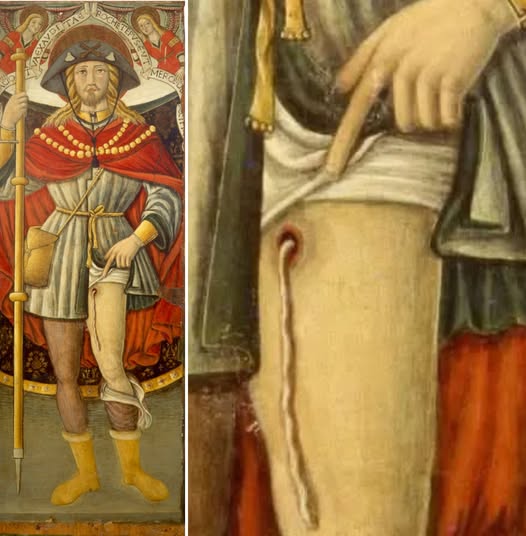
On Saint Roch’s leg, instead of a classic plague bubo, the artist painted a long white filament dripping from an open wound. For years, people assumed it was pus.
Now experts are convinced: it wasn’t pus at all… it was a worm. 🪱😳
Not just any worm — but possibly the earliest artistic depiction of Dracunculus medinensis, the Guinea worm.
A parasite swallowed through contaminated water…
…that lives silently in the body for nearly a year…
…and then erupts through the skin, sometimes stretching up to 1 meter long (3 feet).
Excruciating. Slow. Impossible to forget.
There were no documented cases in Italy — meaning the artist likely saw this horror firsthand, probably from travelers passing through Bari, where the painting still hangs today.
Some historians even believe the “fiery serpents” mentioned during the Israelites’ exodus from Egypt may have been descriptions of this same parasite — the burning sensation victims feel is that intense. 🔥🐍
A single medieval painting… unlocking a medical mystery that spans continents and millennia.
Fun fact: during the late Iron Age & early medieval era, people believed pain was caused by worms crawling underneath the skin and would use magic spells in an attempt to get rid of them, obviously, these spells did not work, but it’s interesting to see a visual example of how every myth has some basis in fact