In short:
This Saturday, another search for the remains of the Beaumont children will be undertaken at the site of the former Castalloy foundry in Adelaide’s west.
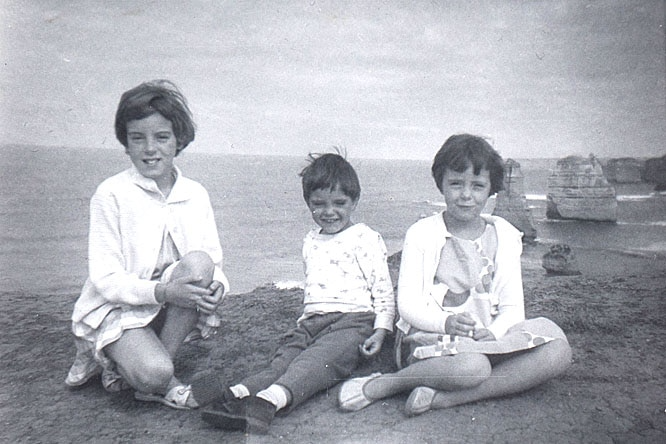
Nine-year-old Jane, seven-year-old Arnna and four-year-old Grant disappeared from Glenelg on Australia Day in 1966.
What’s next?
One of the investigators expects the excavation and search to take seven days, and has estimated the chance of a breakthrough at “about 50 per cent”.
The three siblings have gone down in history as “the Beaumont children”, and their frozen smiles in black-and-white photographs are imbued with agonising and tragic irony.
The story of their disappearance from Adelaide’s Glenelg beach on Australia Day in 1966 has been told and re-told.
‘A large jigsaw puzzle’
As far as justice for the Beaumonts is concerned, the past 60 years have yielded little beyond dashed hopes and false leads.
Several potential suspects have been linked to the case, and a small mountain of books, articles and commercial television specials has been dedicated to the various theories.
In five days’ time, another attempt to uncover the truth will commence. It will be a new beginning along an old trail.
The New Castalloy site at North Plympton in Adelaide where police will search for the remains of the Beaumont children
At the site of the former Castalloy foundry at North Plympton in Adelaide’s west, a private team of investigators will search for the Beaumonts’ remains.
The work has been organised by independent state MP Frank Pangallo who, during his career as a journalist for Channel Seven, investigated the possible involvement of Castalloy manager Harry Phipps in the disappearance of the Beaumonts.
In 2013, Seven aired several allegations about the deceased business director, who has at various times been described as a person of interest.
One of his sons reportedly said he saw the Beaumonts in the backyard of his family home on the day the children vanished.
The story prompted two other men to come forward with the claim that, decades earlier, Mr Phipps had paid them to dig a hole at the Castalloy site.
One of the men said that it was only after seeing the Today Tonight report that he realised the hole could have been a grave.
“I immediately made that connection that, ‘gee whiz, we dug a hole at around about that time on that site’,” he told Seven.
“[It was] about a metre wide, two metres long [and had] pretty straight sides.
“The way I view it is that we’ve got a small piece of what is a large jigsaw puzzle, and it may or may not fit.”
Following the initial story, The Advertiser reported Major Crime detectives had declared that Mr Phipps was not a suspect in the case, but police nevertheless examined and excavated some of the site, first in 2013 and again in 2018.
While the searches revealed no clues, Mr Pangallo believes those involved may have been labouring under a misapprehension — he said information had subsequently come to light suggesting the ground had been raised by a “considerable amount of fill” in the intervening years, meaning the 2018 dig might not have been at the right depth.
“[The soil is] probably a metre to two metres higher than what it was in 1966,” Mr Pangallo said last week.
When asked about the upcoming search, Dr Mallett, who is based at the University of Newcastle and was on site in 2018, said she was “hopeful”.
But she acknowledged that police — who said they did not believe the theory underpinning the effort was “supported by evidence and available information” — had reservations about its prospects.
“They get a lot of tips about this case, so I can understand their scepticism,” she said.
“I do think there is credible information that that site could still be where the children’s bodies are located and this is the last chance [before the land is sold].”
The missing Beaumont children.
The Beaumonts’ parents Nancy and Jim were alive at the time of the 2018 search, but have since died. The yearning for answers, however, has hardly abated.
“While all cases are unique, this one really stands out,” Dr Mallett said.
“There’s such a strength of feeling in South Australia — people really want to know what happened to these three kids.”
A resolution would, of course, help bring closure, but it would not help the Beaumont children.
The remains of Jane, Arnna and Grant may or may not be found at North Plympton, but neither outcome would be enough to prevent their faces from harrowing us forever.